
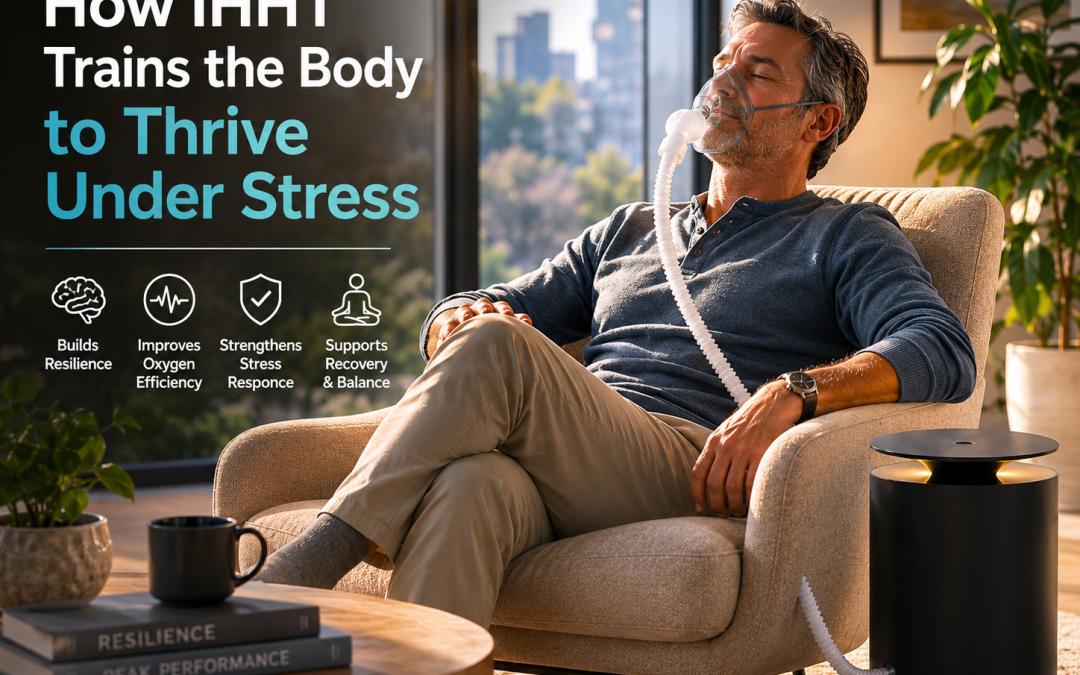
Intermittent Hypoxia Training (IHT/IHHT) works by exposing the body to carefully controlled periods of lower oxygen levels, followed by recovery. Rather than harming the body, this mild stress response triggers a range of beneficial adaptations.
This review examines how intermittent hypoxia influences oxygen-dependent processes throughout the body, including energy production, cardiovascular function, metabolism, and cellular resilience.
Researchers found that controlled hypoxia can stimulate protective biological mechanisms that help cells become more efficient at using oxygen, producing energy, and adapting to stress. These adaptations may contribute to improved physical performance, enhanced recovery, better cardiovascular health, and increased resistance to age-related decline.
The review also highlights the growing therapeutic potential of intermittent hypoxia for a variety of conditions linked to impaired oxygen utilization, metabolic dysfunction, and reduced physiological resilience.
As interest in longevity and performance optimization grows, intermittent hypoxia training is emerging as a promising tool for improving the body's natural ability to adapt, recover, and thrive.
Key Takeaway
The core benefit of IHHT is adaptation. By exposing the body to controlled oxygen challenges, it learns to become stronger, more efficient, and more resilient.
Published study from PubMed-indexed journals demonstrating the science behind intermittent hypoxic training and cellular adaptation.
Kurhaluk N, Lukash O, Nosar V, et al.
Cellular Physiology and Biochemistry
PMID: 38857359
DOI: 10.33594/000000705
View Publication