
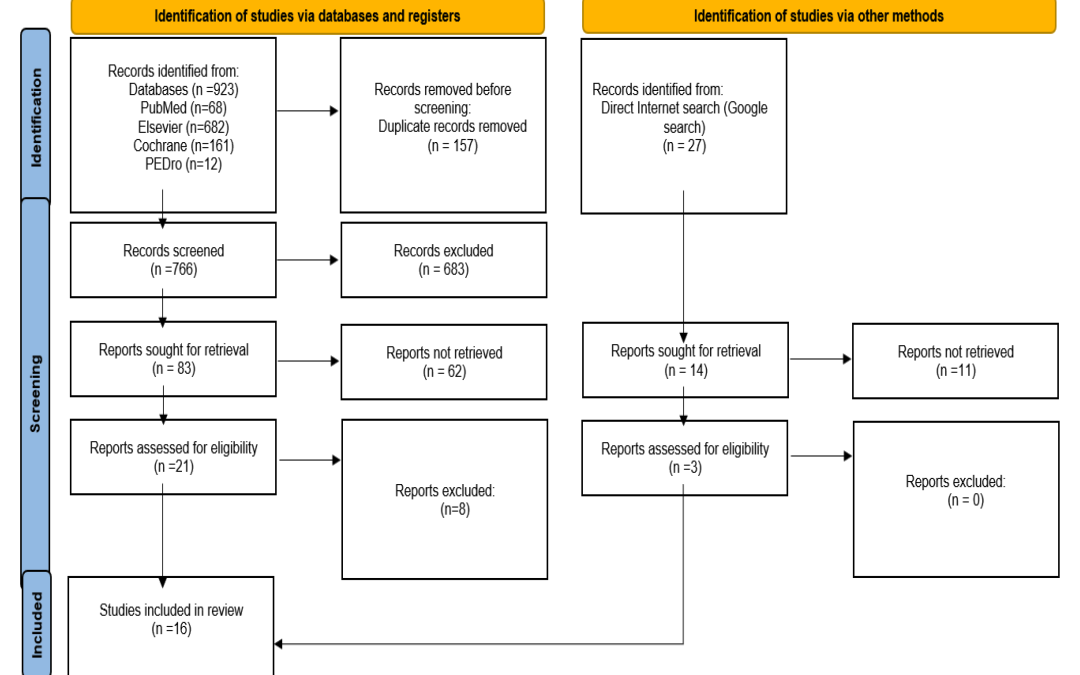
Researchers conducted a systematic review in 2023, following the PRISMA methodology to evaluate the effectiveness of Intermittent Hypoxia–Hyperoxia Therapy (IHHT) in chronic and metabolically relevant diseases. From 923 identified studies, 16 clinical trials met the inclusion criteria.
In patients with metabolic syndrome (n = 65), a three-week IHHT program (15 sessions of 4–7 min hypoxia alternating with 2–4 min hyperoxia) significantly reduced inflammatory markers and improved lipid profiles.
Among coronary artery disease patients (n = 46), IHHT enhanced exercise tolerance and quality of life, while in bypass surgery patients, troponin and lactate levels were lower post-operation, indicating improved myocardial protection.
Elderly participants with mild cognitive impairment showed marked gains in cognitive scores (MoCA) and reductions in Alzheimer’s-related biomarkers after three weeks of IHHT (12 % O₂ / 33 % O₂).
Further trials reported normalized autonomic function and increased endurance in individuals with COPD and cardiovascular disease. Across all studies, IHHT proved safe and well-tolerated, with only mild transient effects such as light dizziness or fatigue.
Overall, the evidence indicates that IHHT enhances cellular energy metabolism, oxygen utilization, and inflammation control, offering an effective, non-pharmacological support strategy for a broad range of chronic conditions.
Source: “Effectiveness of Intermittent Hypoxia–Hyperoxia Therapy in Different Pathologies with Possible Metabolic Implications,” Metabolites (2023). https://www.mdpi.com/2218-1989/13/2/181
TLDR
IHHT alternates low-oxygen and high-oxygen air to train the body to use oxygen better. Across small clinical trials in older adults, cardiac patients, people with metabolic syndrome, and others, IHHT was safe and linked to better stamina, cognition, and metabolic health. More and larger studies are still needed.
What is IHHT
IHHT stands for Intermittent Hypoxia–Hyperoxia Therapy. You breathe in cycles: several minutes of lower oxygen, then several minutes of higher oxygen. Sessions usually last 30 to 60 minutes.
How it works
Low oxygen prompts the body to adapt. High oxygen supports recovery. Together these cycles can improve how cells make energy, how blood carries oxygen, and how tissues use it. The biology involves hypoxia signals like HIF and related pathways that support mitochondria, blood vessels, and antioxidant defenses.
What the evidence shows
The review screened 900+ records and summarized 16 eligible clinical studies from 2017 to 2022 on hypoxia–hyperoxia or hypoxia–normoxia protocols. Results suggest:
- Heart disease: Better exercise tolerance, lipid profile, and quality of life.
- Older adults: Gains in mobility and in some trials cognition.
- Metabolic syndrome: Lower inflammation and improved lipids.
- Mild cognitive impairment: Improved cognitive scores and biomarker shifts.
- Athletes: Signs of reduced muscle damage after hard efforts.
- Surgical preconditioning: Lower markers of heart injury after bypass.
Across studies, IHHT was well tolerated. Sample sizes were small and protocols varied, so more research is needed before broad clinical adoption.
Who might benefit
- Older adults with low stamina
- People with coronary artery disease or hypertension
- People with metabolic syndrome or mild COPD
- Patients with mild cognitive impairment
- Athletes working on recovery
Selection and safety screening should be done by a clinician.
Why it matters
IHHT is a non-drug option that may support rehabilitation and healthy aging. It targets energy production, circulation, and cellular stress control. Early trials show promise with low risk when done under proper protocols.
Key takeaways
- IHHT alternates low and high oxygen to build adaptive capacity.
- Small trials report benefits for heart, brain, and metabolism.
- It appears safe and tolerable in supervised settings.
- Protocols are not yet standardized. Larger trials are needed.
Citation
Uzun A-B, Iliescu M.G., Stanciu L-E., et al. Effectiveness of Intermittent Hypoxia–Hyperoxia Therapy in Different Pathologies with Possible Metabolic Implications. Metabolites. 2023;13(2):181. doi:10.3390/metabo13020181. https://www.mdpi.com/2218-1989/13/2/181